Privacy & cookies

 Dominic Fischer | October 2026
Tourism organisations have collected and shared destination data for years. How can that information become something visitors can actually use? A look at connected data, a practical example from Ansbach and the limits of open data.
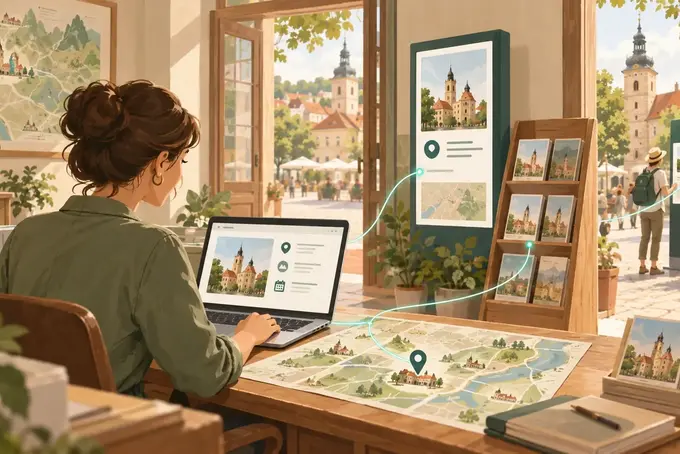
A museum changes its opening hours. Its website is updated, the tourist information team is told and the events calendar is corrected. Yet the digital town guide still displays the old times.
This is a familiar problem: the same information is maintained across multiple platforms. Every additional copy creates work and another opportunity for errors. Frequently, the data already exists. What is missing is a reliable way to make it available wherever it is needed.
Open data is sometimes discussed as though destinations were only just beginning to collect information in a structured way. In reality, tourism data networks have been developing for years, both within countries and across borders.
Germany offers a useful illustration. In 2018, the German National Tourist Board (GNTB), working with the federal states’ tourism organisations, began developing a connected national tourism data infrastructure. Its Knowledge Graph has been publicly accessible since June 2023 and brings together information from all 16 federal states, including openly licensed datasets that other applications can use.
The underlying content comes from established regional and state-level systems. In Baden-Württemberg, for instance, destinations use mein.toubiz; in North Rhine-Westphalia, the Data Hub NRW brings together information from regional sources. The lesson is relevant beyond Germany: before commissioning another database, it is worth checking what trusted tourism datasets and feeds are already available in your area.
These terms are often used interchangeably, but the distinction matters. A central database helps people maintain information in one place. Standardised data can be interpreted by different systems. Open data also comes with licence terms permitting reuse.
Only when the relevant systems, formats, permissions and workflows work together can a destination maintain information once and use it across several channels. A dataset that is technically accessible is not automatically free to republish.

The German town of Ansbach shows what this can look like in practice. In 2025, five digital guides covering almost 100 visitor locations were created. Core information was imported through an interface to the GNTB Knowledge Graph rather than being re-entered manually.
The existing records provided the foundations: attractions, addresses and other visitor information. These were then prepared for presentation and enriched with audio stories. Five guides were assembled in just four days, largely because structured content was already available. That timeframe is specific to this project; the effort elsewhere will depend on data quality, scope and the work needed to make the material visitor-ready.
The division of labour is the important point. Data infrastructure supplies factual building blocks; a visitor-facing guide turns them into information people can understand and use on location.
Connected data does not remove the need for editorial care. If an opening time is wrong in the source system, that mistake may travel to every connected application. The same applies to incomplete descriptions, inaccurate locations and out-of-date contact details.
Images and texts deserve particular attention. Being held in a tourism database does not necessarily mean they can be reused by any third party. Photographs may have separate rights or attribution requirements, and licences should be checked for the intended use.
There are practical technical questions too: which fields are exposed by an API, how often are they refreshed, and can the receiving application interpret them reliably?
Most importantly, facts are not the same as stories. Knowing that a building dates from 1720 tells visitors something. Understanding why it was built, who lived or worked there and what it means to the town takes research and storytelling. Open data can support a walking tour or audio guide, but it cannot provide the whole experience on its own.

A small town does not need a major digital transformation programme to benefit. Start with an inventory: where are attractions, opening times and events maintained today? What information is available through regional tourism bodies? Which details are repeatedly entered into different systems?
Then look at a concrete use case. Could an existing website, digital walking tour or visitor guide draw on a trusted source? Identify what needs to be imported, who owns the content, who checks its quality and what the licence allows. Not every platform needs every data field: a walking tour, an events calendar and a destination website serve different purposes.
A modest pilot often reveals more than an elaborate data strategy. The focus should be a service visitors will notice and a maintenance process the destination can realistically sustain.
Open data can reduce duplication and create new possibilities for visitor information. It does not absolve tourism organisations of responsibility for accuracy, nor does it replace careful editing and accessible presentation.
The strongest results come when information is maintained reliably, shared under the right conditions and shaped for a particular visitor need. For many smaller destinations, that starts not with another system, but with better use of the information they already have.
The meaningful question is not how much data a destination holds. It is what that data helps visitors discover, understand and enjoy.