Privacy & cookies

 Dominic Fischer | September 2026
English is a useful starting point, but not every destination needs ten languages. The real question is which visitors need which information – and how to keep it accurate over time.

International visitors are part of everyday life for destinations of all sizes. Yet standing in front of a heritage building, finding the right walking route or checking opening times can be surprisingly difficult when the information is available only in the local language.
Physical signs have limited space. Put three or four full translations on one panel and even a well-designed display can become hard to read. Digital information offers more flexibility, but adding languages indiscriminately is not necessarily better service.
“We need an English version” is often the first response. For many destinations that makes sense, but the right language mix depends on who actually visits. A border region has different needs from a university city, a wine-growing area or a museum with an international reputation.
Look at visitor surveys, accommodation statistics, enquiries at the tourist information centre, website analytics and what front-of-house teams hear every day. Where do visitors come from? Which languages do they use? At which locations do language barriers cause real problems?
The aim is not to offer the greatest possible number of languages. It is to provide the right ones where they will make a difference.

Essential orientation, access information and opening hours deserve a broader language offer than lengthy historical background material. A heritage site might provide an introduction in four languages while publishing more detailed stories initially in two.
Digital guides make this layered approach practical. Someone passing through may only want a brief explanation. Another visitor might prefer an audio story, archival photographs or a closer look at local history. Neither should have to navigate a wall of translated text to find what matters.
A sign should be easy to understand at a glance: the name of the place, a little context and any essential practical information. A clearly explained QR code can then lead to more detailed content in the visitor’s chosen language.
This does not mean that every sign needs a code, nor that basic information should disappear behind a phone screen. It means keeping the physical display clear while giving people the option to discover more. Our article on QR codes in tourism explores how to make that invitation useful and trustworthy.
A translation can be grammatically flawless and still leave a visitor puzzled. Local administrative terms, historical events, regional traditions and familiar names may need explanation. A UK visitor may have no idea why a particular German building matters; an international visitor to Britain may be equally unfamiliar with a town’s guildhall or industrial past.
Often a short sentence explaining a building’s significance is more valuable than a perfectly literal translation of a long description. Good multilingual content starts with the visitor’s perspective: what do they need to understand before the story makes sense?
Machine translation can save considerable effort, particularly where destinations manage many points of interest. It is a helpful part of the workflow, not a substitute for editorial responsibility.
Check place names, specialist terminology, local references and potentially ambiguous instructions. Start by writing clear source material. Then use translation tools where appropriate and review the most important language versions with qualified people. A confusing original rarely becomes a clear explanation just because it has been translated.
The difficult part often begins after publication. Opening hours change, venues close temporarily and new attractions are added. If every translation lives in a separate document or webpage, versions quickly drift apart.
Decide where the source text is maintained, how changes reach translated versions and who signs them off. Separate stable historical content from details that change frequently. For a larger visitor offer, reliable central management often matters more than launching with one additional language.
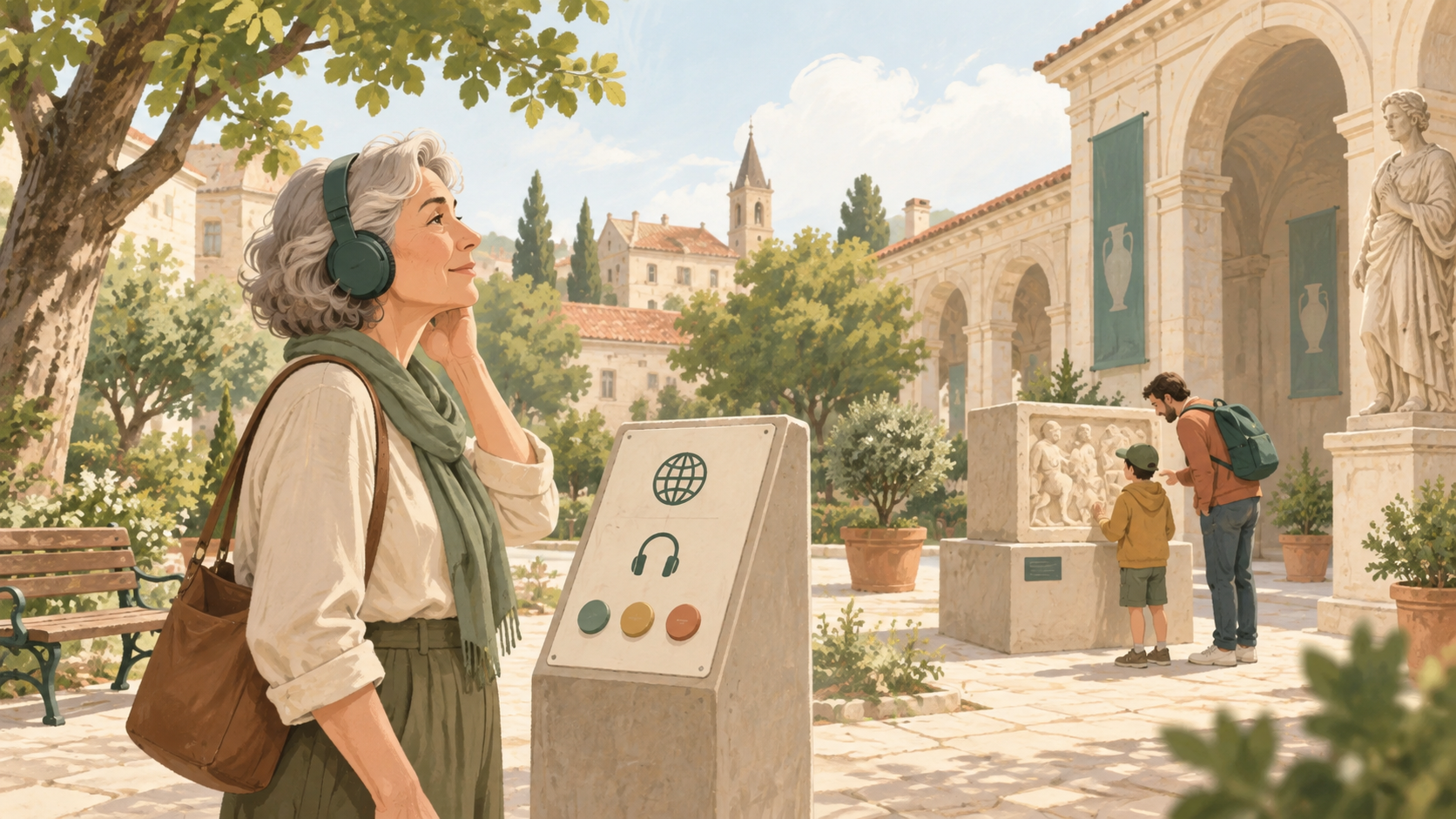
Browser-based walking tours can bring several languages together without requiring an app download; visitors can arrive directly from a QR code at the location. Our article on digital walking tours without an app considers where this approach works and where it has limits.
Multilingual visitor information need not become a vast translation programme. Identify your key audiences, prioritise the points where understanding matters and create a manageable editorial process. The question to keep asking is simple: if I were standing here for the first time, would I understand what I need to know?