Privacy & cookies

 Dominic Fischer | June 2026
Signs still matter. But a well-placed digital layer can make visitor information more useful, more inclusive and easier to keep up to date.
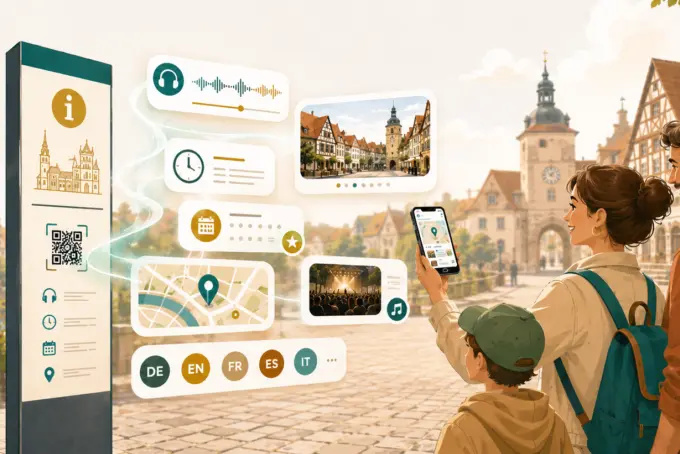
Traditional signs are not the problem. Expecting them to do everything is.
Wayfinding signs, interpretation panels and noticeboards have long been part of the visitor experience. They help people find their way, recognise places of interest and understand what they are looking at. In a town centre, at a heritage site or along a walking trail, clear physical signage is still indispensable.
But visitors often want more than a name, an arrow and a paragraph of background. They may want to hear the story behind a building, check whether a museum is open, find a family-friendly route or read the information in another language. The challenge is not that signs have stopped working. It is that their role has become more limited.
A panel has a fixed size and a fixed location. Once installed, changing what it says usually involves design work, approvals, printing and installation. That is perfectly manageable for permanent directions, but far less practical for information that changes throughout the year.
Space creates another constraint. A short description of a monument may fit comfortably on a panel; oral histories, archival photographs, extended interpretation and several translations rarely do. Trying to include everything can leave visitors with a wall of text that few will read.
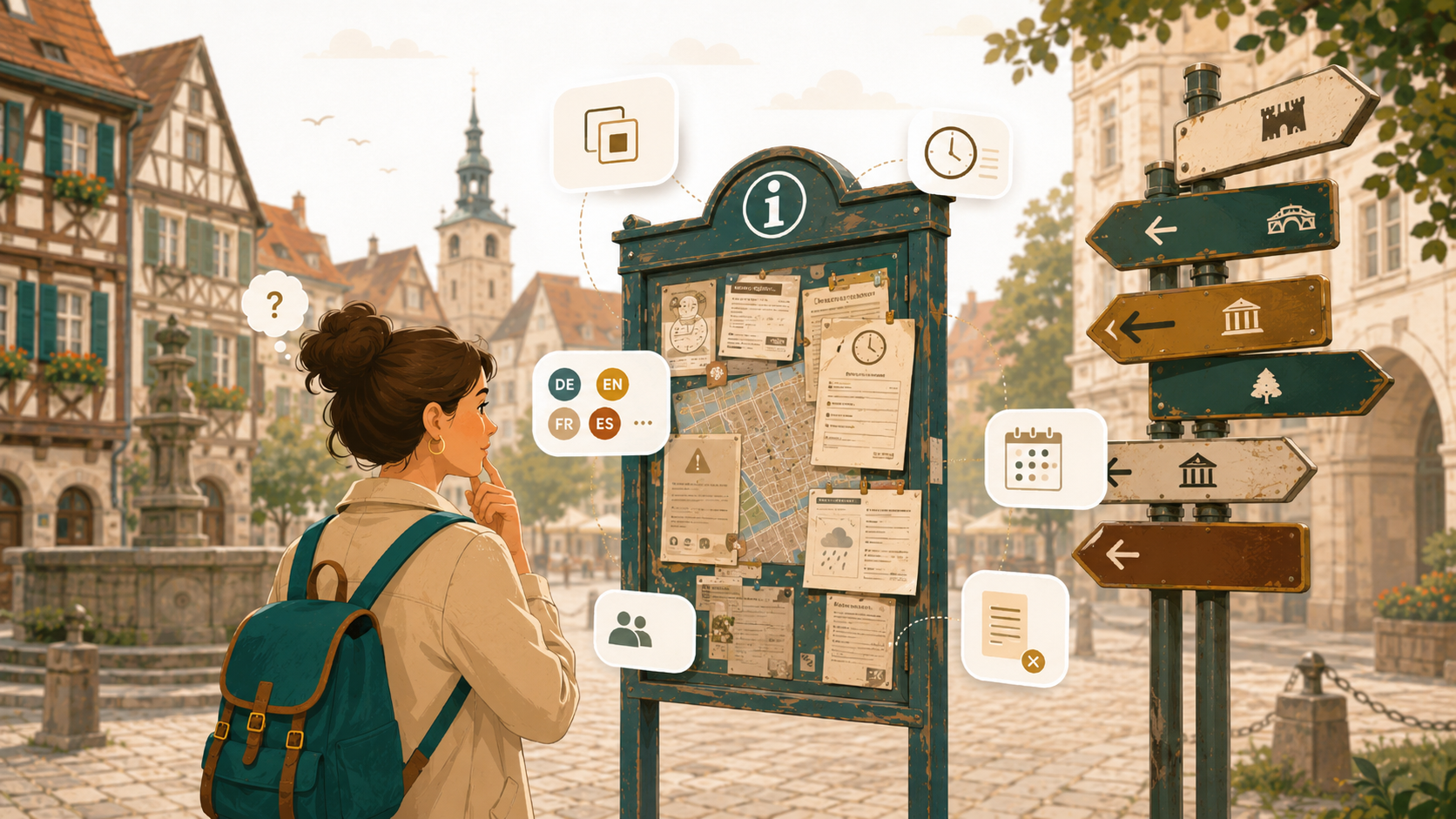
Opening hours change, temporary exhibitions come and go, local businesses move and events are rescheduled. A sign can remain in place for years, while parts of its content may become inaccurate within months.
That does not mean every panel should be replaced with a screen. It means destinations need to decide which information is genuinely permanent and which would be better managed digitally. Keeping those roles separate makes both channels more dependable.
For international visitors, English may be a useful starting point, but it will not always be sufficient. The right language mix depends on the destination, its communities and its visitor markets.
Printing every translation on the same sign can compromise legibility. A digital extension can offer language choices without making the physical panel harder to navigate. Translation quality still matters, of course: proper names, local references and cultural context need editorial attention, not just automatic conversion.
A QR code or short web address can connect a physical location to an audio story, a historic photograph, a suggested walk or practical information nearby. The physical sign provides the visible, trusted invitation; the mobile experience offers the detail.
Consider someone standing outside a historic town hall. The panel can identify the building and explain its significance in a few lines. A mobile guide can then let that person choose between a two-minute audio introduction, a longer article or the next stop on a walking route. None of those options needs to compete for space on the sign.
Access has to be designed carefully. A code that leads to a generic home page or an awkward PDF is not a meaningful improvement. The digital information should open at the relevant place, work well on a phone and make its value clear before visitors scan.
Many places gradually accumulate signs for separate projects, events and organisations. Each new panel has a sound reason for existing, but the combined effect can be visual clutter.
A digital layer will not remove the need for essential safety, direction or regulatory signage. It can, however, reduce pressure to install a new permanent panel every time a destination wants to tell another story. The result can be a calmer streetscape with richer information available to those who want it.
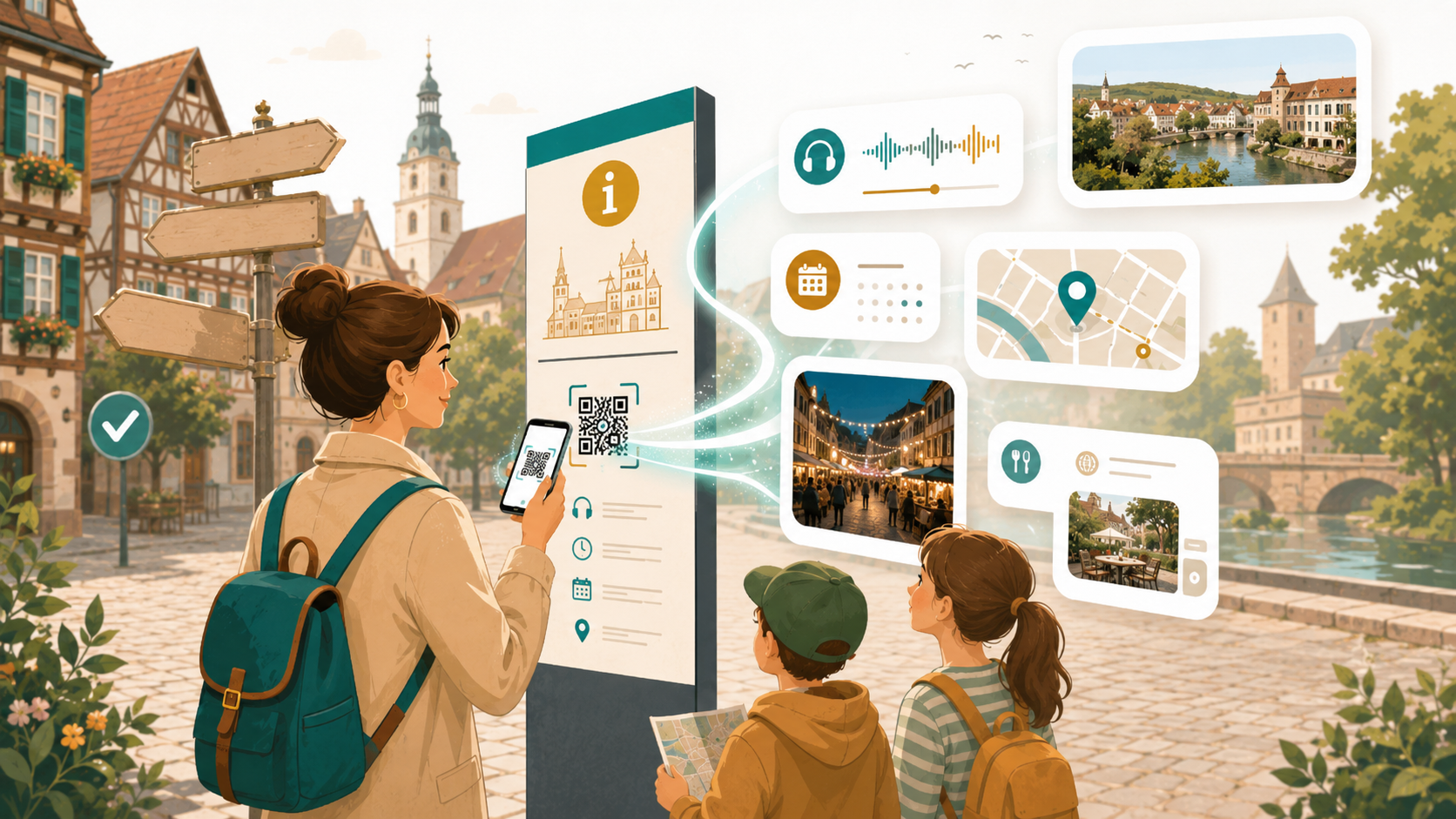
Installing a wayfinding scheme used to feel like the end of a project. Today it is more helpful to think of visitor information as a continuing service. Content needs owners, review dates and a straightforward process for updates.
Digital tools can simplify that process when information is maintained centrally and published to the places where visitors actually encounter it. They do not solve poor editorial processes automatically; someone must still decide what is accurate and relevant.
The most useful question is not whether destinations should choose signs or smartphones. It is what each can do best. Physical signage is visible, immediate and dependable. Digital content can offer depth, languages and timely updates.
For councils, destination organisations and cultural venues, a sensible first step is to review existing touchpoints: which signs work well, which information changes frequently, and where would extra content genuinely help? A small pilot at a handful of locations can reveal more than a technology-first overhaul.
The aim is not to add digital features for their own sake. It is to help visitors find the right information at the moment they need it.